
As the Union government explores ways to restrict import of laptops and other electronic devices starting with a 5 per cent reduction from the current level, it is working to ensure that there's no supply disruption in India even if an import cap is introduced, it is learnt. The caveat assumes significance in the context of the government's announcement of its plan in August 2023 to issue licences for import of select IT hardware products to reduce the country's dependence on China.

'We may see even more restrictive policies during 2.0.'
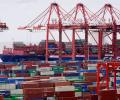
Exports to eight out of India's top 10 destinations, including the Netherlands, the United States (US) and the United Kingdom (UK), witnessed positive growth during the first six months of FY25, despite muted global demand amid geopolitical challenges, commerce department data showed.

Ratan Tata: A Life, the much awaited biography, reveals that after a year of 'parallel running', Tata began having second thoughts about Cyrus Mistry's 'suitability'. 'Mistry targeted Ratan, the man who had elevated him from virtual oblivion into the mainstream of the Tatas...'

The United Arab Emirates (UAE) has agreed to look into India's concerns over compliance to rules related to the import of silver products, platinum alloy and dry dates, the commerce department said on Tuesday. During a joint committee meeting under the India-UAE trade deal, officials from New Delhi raised concerns over the recent surge in imports of these products. These were being shipped to India, taking advantage of the lower tariffs under the pact.

India has reduced the time period for foreign investors to seek international arbitration from five years to three years as part of the recently signed investment pact with the United Arab Emirates (UAE), a departure from its model Bilateral Investment Treaty (BIT). Under the Investor-State Dispute Settlement (ISDS) mechanism, if the Indian judicial system is unable to resolve a dispute within this shortened period, investors can resort to international arbitration. The investment pact, signed on February 13 in Abu Dhabi, came into force on August 31, replacing the previous pact.

India stares at the risk of an influx of Chinese products as US tariffs on a range of Chinese goods, including solar panels, electric vehicles, lithium-ion batteries, syringes, and steel, are set to take effect from September 27. With higher tariffs reducing China's access to the US market, there is concern that China may divert its exports to other markets, including India, which could lead to potential dumping of goods. This situation could challenge Indian industries, particularly in sectors where competition with Chinese products is already fierce.

Concerned over the fallout of the Red Sea crisis and severe shortage of containers against the backdrop of a steep decline in merchandise exports in August, the Union government is pulling out all the stops to find a solution. To begin with, the government has devised a strategy aimed at boosting container supply and supporting exporters.

'We can hope to see a lot of creation of jobs in the days to come.'

The new guidelines, effective from August 1, aim to expedite visa approvals for nationals from China and other countries sharing land borders with India.
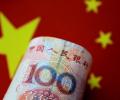
India is not "rethinking" supporting investments from China, said Commerce and Industry Minister Piyush Goyal on Tuesday, referring to a proposal made in the Economic Survey 2024. The survey by India's chief economic advisor last week said India had two "choices" to benefit from the so-called China plus one strategy, either by integrating into that country's supply chain or by promoting foreign direct investment (FDI). "Chief economic advisor's report speaks about new ideas and gives out their own thinking. It is not at all binding on the government and there is no rethinking to support Chinese investments in the country," Goyal told reporters in Delhi.

India has flagged concerns over non-tariff barriers (NTBs) faced by its exporters with the Russian government, commerce secretary Sunil Barthwal said on Monday. NTBs faced by Indian exporters are mainly in sectors such as marine products and pharmaceuticals.

India's trade deficit with Russia continued to widen for the second consecutive year to $57 billion in the financial year 2023-24 (FY24), with Moscow becoming New Delhi's largest source of crude oil imports. All eyes will now be on Prime Minister Narendra Modi's visit to Russia during July 8-9, where he is set to meet President Vladimir Putin. This will be Modi's first visit to the Kremlin since the Russia-Ukraine conflict began over two years ago.

The government-backed Open Network for Digital Commerce (ONDC) is likely to start levying user charges in the current financial year.

The government is expediting visa-related issues to bring technicians to India from any country, not just China, as and when required, to ensure the smooth implementation of the flagship production-linked incentive (PLI) scheme aimed at boosting domestic manufacturing. "If those under the PLI scheme need to get their equipment installed, we try to expedite the ability to get technicians into India from any country, whichever it may be," Union Commerce and Industry Minister Piyush Goyal told Business Standard in an interview.

To burnish production-linked incentive (PLI) schemes, the government is considering an overhaul of some of them relating to sectors such as textiles and pharma, and making incentive payments quarterly, officials in the know said. In a bid to cut the delay in processing incentive claims, the government is looking at switching to a quarterly disbursement of incentives. Currently, in most schemes, incentives are annual.

The commerce department has reaffirmed its plans to launch the 'Trade Connect' e-platform to help exporters connect with stakeholders of international trade, as a part of the new government's 100-day action plan, a senior government official said.
Another priority in the first 100 days could be the launch of an e-platform -- Trade Connect -- to help exporters connect with stakeholders of international trade.

'The youth is stressed and students are depressed.'

As Chandigarh braces for a fierce contest between Congress candidate Manish Tewari and the BJP's Sanjay Tandon, its industry leaders harbour a fervent wish: Replicate the success of the National Capital Region model in this Union Territory.
 © 2026 Rediff.com - Advertise with us - Disclaimer - Privacy Policy - Sitemap - Feedback - About us - Terms of use - Grievances